FDF FREE | Newsletter | Abbonamenti | Archivio | EFFEDIEFFESHOP.com | Chi Siamo | Redazione | Contatti


 >> Login Abbonati :
           
Password dimenticata ?
Jewish History & Myth
Rense.com    21 aprile 2008
  Stampa
  Manda per E-mail
  Testo    
'The Lion and the Gazelle'

Most interesting article written by a prominent Israeli peace activist, journalist and former member of the Israeli Knesset. He discusses the role of myth and the bible and how it relates to Jewish and Israeli history.
 
Ed Corrigan

___________
 

TONIGHT THE JEWS all over the world will celebrate the Seder, the unique ceremony that unites Jews everywhere in the defining Jewish myth: the Exodus from Egypt.
 
Every year I marvel again at the genius of this ceremony. It unites the whole family, and everyone - from the venerable grandfather to the smallest child - has a role in it. It engages all the senses: seeing, hearing, smelling, tasting and touching. The simplistic text of the Haggadah, the book which is read aloud, the symbolic food, the four glasses of wine, the singing together, the exact repetition of every part every year - all these imprint on the consciousness of a child from the earliest age an ineradicable memory that they will carry with them to the grave, be they religious or not. They will never forget the security and warmth of the large family around the Seder table, and even in old age they will recall it with nostalgia. A cynic might see it as a perfect example of brain-washing.
 
Compared to the power of this myth, does it really matter that the Exodus from Egypt never took place? Thousands of Egyptian documents deciphered in recent years leave no room for doubt: the exodus of masses of people, as described in the Bible, or anything remotely like it, just never happened. These documents, which cover in the finest detail every period and every part of Canaan during this epoch prove beyond any doubt that there was no "Conquest of Canaan" and no kingdom of David and Solomon. For a hundred years, Zionist archeologists have devoted tireless efforts to finding even a single piece of evidence to support the Biblical narrative, all to no avail.
 
But this is quite unimportant. In the competition between "objective" history and myth, the myth that suits our needs will always win, and win big. It is not important what was, the important thing is what fires our imagination. That is what guides our steps to this day.
 
THE BIBLICAL narrative connects up with documented history only around the year 853 BC, when ten thousand soldiers and 2000 battle chariots of Ahab, King of Israel, took part in a grand coalition of the kingdoms of Syria and Palestine against Assyria. The battle, which was documented by the Assyrians, was fought at Qarqar in Syria. The Assyrian army was delayed, if not defeated.
 
(A personal note: I am not a historian, but for many years I have reflected on our history and tried to draw some logical conclusions, which are outlined here. Most of them are supported by the emerging consensus of independent scholars around the world.)
 
The kingdoms of Israel and Judea, which occupied a part of the land between the Mediterranean and the Jordan, were no different from the other kingdoms of the region. Even according to the Bible itself, the people sacrificed to various pagan deities "on every high hill and under every green tree". (1 Kings 14:23).
 
Jerusalem was a tiny market town, much too small and much too poor for any of the things described in the Bible to have taken place there at the time. In the books of the Bible that deal with that period, the appellation "Jew" (Yehudi in Hebrew) hardly appears at all, and where it does, it clearly refers simply to an inhabitant of Judea, the area around Jerusalem. When an Assyrian general was asked "talk not with us in the Jewish language" (2 Kings 18:26), what was meant was the local Judean dialect of Hebrew.
 
The "Jewish" revolution took place in the Babylonian exile (587-539 BC). After the Babylonian conquest of Jerusalem, members of the Judean elite were exiled to Babylon, where they came into contact with the important cultural streams of the time. The result was one of the great creations of mankind: the Jewish religion.
 
After some fifty years, some of the exiles returned to Palestine. They brought with them the name "Jews", the appellation of a religious-ideological-political movement, much like the "Zionists" of our time. Therefore, one can speak of "Judaism" and "Jews" - in the sense accepted now - only from then on. During the following 500 years, the Jewish monotheistic religion gradually crystallized. Also at this time, the most outstanding literary creation of all times, the Hebrew Bible, was composed. The writers of the Bible did not intend to write "history", in the sense understood today, but rather a religious, edifying and instructive text.
 
TO UNDERSTAND the birth and development of Judaism, one must consider two important facts:
 
(a) Right from the beginning, when the "Jews" came back from Babylon, the Jewish community in this country was a minority among the Jews as a whole. Throughout the period of the "Second Temple", the majority of Jews lived abroad, in the areas known today as Iraq, Egypt, Libya, Syria, Cyprus, Italy, Spain and so on.
 
The Jews of that period were not a "nation" - the very idea did not yet exist. The Jews of Palestine did not participate in the rebellions of the Jews in Libya and Cyprus against the Romans, and the Jews abroad took no part in the Great Revolt of the Jews in this country. The Maccabees were not national but religious fighters, rather like the Taliban in our days, and killed many more "Hellenized" Jews than enemy soldiers.
 
(b) This Jewish Diaspora was not a unique phenomenon. On the contrary, at that time it was the norm. Notions like "nation" belong to the modern world. During the period of the "Second Temple" and later on, the dominant social-political pattern was a religious-political community enjoying self-government and not attached to any specific territory. A Jew in Alexandria could marry a Jewess in Damascus, but not the Christian woman across the street. She, on her part, could marry a Christian man in Rome, but not her Hellenist neighbor. The Jewish Diaspora was only one of many such communities.
 
This social pattern was preserved in the Byzantine Empire, was later taken over by the Ottoman Empire and can still be detected in Israeli law. Today, a Muslim Israeli cannot marry a Jewish Israeli, a Druze cannot marry a Christian (at least not in Israel itself). The Druze, by the way, are a surviving example of such a Diaspora.
 
The Jews were unique only in one respect: after the European peoples gradually moved on to new forms of organization, and in the end turned themselves into nations, the Jews remained what they were - a communal-religious Diaspora.
 
THE PUZZLE that is occupying the historians is: how did a tiny community of Babylonian exiles turn into a worldwide Diaspora of millions? There is only one convincing answer to that: conversion.
 
The modern Jewish myth has it that almost all the Jews are descendents of the Jewish community that lived in Palestine 2000 years ago and was driven out by the Romans in the year 70 AD. That is, of course, baseless. The "Expulsion from the Country" is a religious myth: God was angry with the Jews because of their sins and exiled them from His country. But the Romans were not in the habit of moving populations, and there is clear evidence that a great part of the Jewish population in the country remained here after the Zealots' Revolt and after the Bar-Kochba uprising, and that most Jews lived outside the country long before that.
 
At the time of the Second Temple and later, Judaism was a proselytizing religion /par excellence/. During the first centuries AD it fiercely competed with Christianity. While the slaves and other downtrodden people in the Roman Empire were more attracted to the Christian religion, with its moving human story, the upper classes tended towards Judaism. Throughout the Empire, large numbers adopted the Jewish religion.
 
Especially puzzling is the origin of "Ashkenazi" Jewry. At the end of the first millennium there appeared in Europe - apparently out of nowhere - a very large Jewish population, the existence of which was not documented before. Where did they come from?
 
There are several theories about that. The conventional one holds that the Jews wandered from the Mediterranean area to the North, settled in the Rhein valley and fled from the pogroms there to Poland, at the time the most liberal country in Europe. From there they dispersed into Russia and Ukraine, taking with them a German dialect that became Yiddish. The Tel Aviv University scholar Paul Wexler asserts, on the other hand, that Yiddish was originally not a German but a Slavic language. A large part of Ashkenazi Jewry, according to this theory, are descendents of the Sorbs, a Slavic people that lived in Eastern Germany and was forced to abandon its ancient pagan creed. Many of them preferred to become Jews, rather than Christians.
 
In a recent book with the provocative title "When and How the Jewish People was Invented", the Israeli historian Shlomo Sand argues - like Arthur Koestler and others before him - that most of the Ashkenazi Jews are really descended from the Khazars, a Turkic people that created a large kingdom in what is now South Russia more than a thousand years ago. The Khazar king converted to Judaism, and according to this theory the Jews of Eastern Europe are mostly the descendants of Khazar converts. Sand also believes that most Sephardi Jews are descendents of Arab and Berber tribes in North Africa that had converted to Judaism instead of becoming Muslims, and had joined in the Muslim conquest of Spain.
 
When Jewry stopped proselytizing, the Jews became a closed, ethnic-religious community (as the Talmud says: "Converts are hard for Israel like a skin disease").
 
But the historical truth, whatever it is, is not so important. Myth is stronger than truth, and it says that the Jews were expelled from this land. This is an essential layer in modern Jewish consciousness, and no academic research can shake it.
 
IN THE LAST 300 years, Europe turned "national". The modern nation replaced earlier social patterns, such as the city state, feudal society and the dynastic empire. The national idea carried all before it, including history. Each of these new nations shaped an "imagined history" for itself. In other words, every nation rearranged ancient myths and historical facts in order to shape a "national history" which proclaims its importance and serves as a unifying glue.
 
The Jewish Diaspora, which - as mentioned before - was "normal" 2000 years ago, became "abnormal" and exceptional. This intensified the Jew-hatred that was anyhow rampant in Christian Europe. Since all the national movements in Europe were - more or less - anti-Semitic, many Jews felt that they were left "outside", that they had no place in the new Europe. Some of them decided that the Jews must conform to the new /Zeitgeist/ and turn the Jewish community into a Jewish "nation".
 
For that purpose, it was necessary to reshape and reinvent Jewish history and turn it from the annals of a religious-ethnic Diaspora into the epic story of a "nation". The job was undertaken by a man who can be considered the godfather of the Zionist idea: Heinrich Graetz, a German Jew who was influenced by German nationalism and created a "national" Jewish history. His ideas have shaped Jewish consciousness to this day.
 
Graetz accepted the Bible as if it were a history book, collected all the myths and created a complete and continuous historical narrative: the period of the Fathers, the Exodus from Egypt, the Conquest of Canaan, the "First Temple", the Babylonian Exile, the "Second Temple", the Destruction of the Temple and the Exile. That is the history that all of us learned in school, the foundation upon which Zionism was built.
 
ZIONISM REPRESENTED a revolution in many fields, but its mental revolution was incomplete. Its ideology turned the Jewish community into a Jewish people, and the Jewish people into a Jewish nation - but never clearly defined the differences. In order to win over the religiously inclined Jewish masses in Eastern Europe, it made a compromise with religion and mixed all terms into a one big cocktail - the religion is also a nation, the nation is also a religion, and later asserted that Israel is a "Jewish state" that belongs to its (Jewish?) citizens but also to the "Jewish people" throughout the world. Official Israeli doctrine has it that Israel is the "Jewish nation state", but Israeli law narrowly defines a "Jew" as only a person who belongs to the Jewish religion.
 
Herzl and his successors were not courageous enough to do what Mustafa Kemal Ataturk did when he founded modern Turkey: he fixed a clear and sharp border between the Turkish nation and Islamic religion and imposed a complete separation between the two. With us, everything remained one big salad. This has many implications in real life.
 
For example: if Israel is the state of the "Jewish people", as one of our laws says - what is there to stop an Israeli Jew from joining the Jewish community in California or Australia? Small wonder that there is almost no leader in Israel whose children have not emigrated.
 
WHY IS IT so important to differentiate between the Israeli nation and the Jewish Diaspora? One of the reasons is that a nation has a different attitude to itself and towards others than a religious-ethnic Diaspora.
 
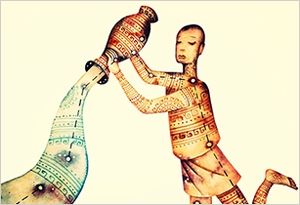
Similarly: different animals have different ways of reacting to danger. A gazelle flees when it senses danger, and nature has equipped it with the necessary instincts and physical capabilities. A lion, on the other side, sticks to its territory and defends it against intruders. Both methods are successful, otherwise there would be no gazelles or no lions in the world.
 
The Jewish Diaspora developed an efficient response that was well suited to its situation: when Jews sensed danger, they fled and dispersed. That's why the Jewish Diaspora managed to survive innumerable persecutions, and even the Holocaust itself. When the Zionists decided to become a nation - and indeed did create a real nation in this country - they adopted the national response: to defend themselves and attack the sources of danger. One cannot, therefore, be a Diaspora and a nation, a gazelle and a lion, at the same time.
 
If we, the Israelis, want to consolidate our nation, we have to free ourselves from the myths that belong to another form of existence and re-define our national history. The story about the exodus from Egypt is good as a myth and an allegory - it celebrates the value of freedom - but we must recognize the difference between myth and history, between religion and nation, between a Diaspora and a state, in order to find our place in the region in which we live and develop a normal relationship with the neighboring peoples.


By Uri Avnery Gush Shalom

Source > 
    Rense .com


Home  >  Worldwide                                                                                         Back to top


Copyright © - EFFEDIEFFE - all rights reserved.
Link a questo articolo : http://www.effedieffe.com/content/view/2934/152/

Commenti : (3)
Wolf MURMELSTEIN
Ladispoli , aprile 21, 2008 17:48

Al Vostro amico Uri Avnery vorrei dire solo che l'assenza di riscontri archeologici o letterari non ebraici non autorizza dubbi sullìautenticità della narrazione biblica.
Il Sig. Uri Avnery dovrebbe sapere che essere ebreo è una sorte dalla quale non si sorte.
Dietro i miti millenari si celano verità
storiche delle quali non conosciamo più i dettagli; magari per fonti letterarie distrutte nei roghi medievali.
Se il Sig. Uri Avnery ritiene che l'Esodo sia solo un mito non capisco con quale spirito partecipa al Seder di Pesach.
Su queste pagine dopo Ariel Toaff è stato arruolato anche Uri Avnery.


Manno Mauro
napoli , aprile 21, 2008 17:54

Vedo una contraddizione in quello che dice Uri Avnery. Da una parte egli ammette che l'idea di popolo ebraico o quella di nazione ebraica è costruita sul mito e non nella storia. Dall'altra dice che gli israeliani sono un popolo e che devono difendere Israele come la loro terra. E una contraddizione che deriva dalla sua accettazione, seppur molto critica, del sionismo.
Se gli ebrei non sono mai esistiti come popolo e come nazione ma l'ebraismo è una religione a cui si sono convertite nel tempo persone appartenenti a vari altri popoli (i kazari, i berberi, gli yemeniti, gli alcuni etiopi, ecc)allora vuol dire che gli ebrei non vengono dalla Palestina (se non in piccolissima minoranza)ma vengono dalla Russia, dalla penisola arabica, dal Nord Africa, dall'Etiopia. Ed è lì che dovevano rimanere continuando a praticare la loro religione. Se non vogliono rimanere presso i popoli ai quali appartengono (turchi, slavi, arabi, berberi, etiopi ecc) allora possono andare altrove ma non in Palestina. La Palestina appartiene ai palestinesi molti dei quali sono discendenti di ebrei convertiti all'Islam o al cristianesimo. Fare di una religione una nazione è oggi equivalente ad un crimine. Cosa dovrebbero fare i cristiani secondo questa logica? Dovrebbero costituirsi in una nazione unica, in uno stato unico e quindi cacciare i non cristiani dal loro stato come i sionisti hanno cacciato e stanno cacciando (o sterminando) i palestinesi. I cristiani dovrebbero anche rivendicare quelle terre dove il cristianesimo è nato e si è sviluppato nei primi secoli: cioè dovrebbero rivendicare in primo luogo la Palestina (dove è nato Cristo), la Siria, la Turchia, L'Egitto, il Nord Africa, ecc. Appartenere ad una religione non vuol dire che non si possa vivere nello stesso paese e nello stesso stato dove vive gente di altra fede religiosa. Gli ebrei hanno vissuto per secoli con la loro religione in paesi e stati diversi. Oggi dicono di volere uno stato solo per loro. E' una scelta criminale che sta portando solo sventure all'umanità, in Palestina, in Medio Oriente, nel mondo. Se l'ebraismo è una religione allora gli ebrei devono rinunciare all'idea di essere un popolo o una nazione e devono accettare di vivere come minoranza religiosa nei paesi presso i quali storicamente si sono convertiti. Lasciare la terra in cui ci si è convertiti nel passato, per andare a occupare un'altra terra togliendola ai loro legittimi e storici abitanti è solo arroganza, violenza, ingiustizia e causa di guerre infinite. Gli ebrei sono responsabili proprio di ciò.
L'unica soluzione a questo terribile dramma della Palestina è la creazione di uno stato unico per palestinesi ed ebrei. Come in Sud Africa. Anche i bianchi del sudAfrica non appartengono all'Africa australe, ma ormai ci sono e non li si può cacciare. Essi hanno accettato di rinunciare ad uno stato per soli bianchi e oggi vivono alla pari (più o meno) con i neri, in un unico stato. Gli ebrei dovrebbero fare lo stesso. Dovrebbero rinunciare ad uno stato per soli ebrei, vivere in pace da uguali con i palestinesi e permettere ai palestinesi che essi hanno cacciato nel 1948 di tornare. Quegli ebrei che non accettano questa soluzione sono liberi di emigrare e tornare presso i popoli a cui appartengono, presso i russi, i polacchi, i berberi, gli yemeniti, gli etiopi o gli altri popoli dai quali si sono allontanati per andare a massacrare i palestinesi.
Tra l'altro, il libro di Zand (e l'articolo di Avnery) dimostra che gli attuali palestinesi derivano o da quelle popolazioni cananee che da sempre hanno abitato la Palestina o dagli ebrei che si sono convertiti all'Islam o al cristianesimo.
L'idea che gli ebrei possedessero interamente la Palestina è una favola. Ancora più falsa è l'idea che siano stati cacciati dalla Palestina dai Romani nel 70 dopo Cristo, sotto l'imperatore Tito. Una una falsità assoluta. Una parte degli ebrei allora era alleata dei romani. Lo storico Flavio Giuseppe era uno di questi. Egli assunse il nome di 'flavio' proprio in segno di amicizia con i romani e la famiglia di Tito (che era Flavio, come suo padre Vespasiano, iniziatore della dinastia Flavia, e suo fratello Domiziano, imperatore romano dopo Tito). I romani non solo non cacciarono mai gli ebrei dalla Palestina ma non cacciarono nemmeno gli ebrei nemici dei romani, gli zeloti, i fanatici. Infatti questi zeloti, fanatici e fondamentalisti si ribellarono di nuovo contro Roma, qualche anno dopo, contro le truppe dell'imperatore Adriano. Solo 55 anni anni erano passati dalla distruzione del tempio (di Gerusalemme, ma non degli altri templi e sinagoghe) da parte di Tito e Adriano fu costretto a combattere lo stesso tipo di fondamentalismo ebraico. Riuscì a sconfiggerlo dopo l'assedio di Masada (133 DC). Nemmeno allora i romani cacciarono o dispersero gli ebrei. Sempre gli ebrei, infatti, ritroviamo nel 612 dC in Palestina, quali artefici di un fatto drammatico ma poco noto. In quell'anno la Palestina che prima era stata una provincia bizantina, fu invasa dai persiani, in quei tempi i nemici più potenti dei bizantini. I persiani fecero circa 60 000 prigionieri cristiani. Gli ebrei si allearono subito con i persiani e facilitarono la sconfitta dei bizantini. Quindi comprarono i 60 000 prigionieri cristiani dai persiani e piuttosto che usarli come schiavi (questa era la norma allora) li sgozzarono tutti, fino all'ultimo, per placare la loro sete di sangue e di vendetta contro i cristiani.
Dopo il 632 dC la Palestina come gran parte del Medio Oriente fu conquistata dagli arabi. Nemmeno gli arabi cacciarono gli ebrei . Molti ebrei si convertirono invece all'Islam e finirono per formare così il popolo palestinese assieme agli altri palestinesi non ebrei, ma cristiani o pagani. Il paganesimo poi fu sconfitto definitivamente dall'Islam, ma non il cristianesimo e ancora oggi esistono palestinesi cristiani, di rito armeno o cattolico, ma soprattutto ortodosso.
A tutti costoro appartiene la Palestina e non agli askenaziti provenienti dall'est europeo o dall'America o a quei sefarditi provenienti dal Nord Africa, dallo Yemen o dall'Etiopia.
La follia sionista, fondata sul mito e sulla falsificazione della storia deve essere combattuta, smantellando proprio quelle favole, quelle menzogne e quei miti che gli ebrei continuano a coltivare e a imporre e che i sionisti (israeliani e della lobby ebraica americana) continuano ad usare per la loro politica razzista e guerrafondaia. Grazie a Shlomo Sand e anche un po' ad Avnery per la loro battaglia in favore della verità storica, della pace e della giustizia.

mauro manno


Mancu Li Cani
Utopia , aprile 22, 2008 00:54

Vorrei aggiungere a quello che ha detto il sig. Manno che i Sionisti in tutto il mondo stanno creando ,come noto, una "Religio" basata ed estrapolata sui fatti (allo stato attuale difficilmente da accertare in modo scientifico da un mondo accademico per la maggior parte timoroso di finire in galera in nome della verità storica a cui loro sono preposti) accaduti tra il 43 e il 45 nell'allora Germania, ed usano la loro influenza mediatica e finanziaria per imporre questa religione tale da instillare nel cittadino occidentale una forma di devozione e di assenso al mondo ebraico, proprio per impedire non già la rivelazione al mondo che la shoà è prima di tutto mezzo per raggiungere un fine politico-messianico di gran lunga più efficace di qualsiasi arma, ma per impedire che la storiografia faccia il suo naturale corso , proprio come stava avvenendo prima delle due guerre.
Certamente il mondo politico ,culturale, accademico arabo e orientale è perfettamente conscio di questo tabù che l'occidente non può e non vuole infrangere, ciò significa prima di tutto che in un tavolo della pace la comprensione tra le parti occidente proisraele da un lato e palestinesi e mondo arabo dall'altro non è possibile poichè esiste una oggettività ,un fatto, una realtà sionista da un lato ed una oggettività araba-palestinese dall'altra in questi termini qualsiasi forma di dialogo è concettualmente impossibile da sostenere.
Se le masse europee ed americane aprissero gli occhi su questa oggettività prosionista, cioè se questo tabù crollasse, a mio avviso si verificherebbe una ondata di antiebraismo in tutto il mondo e ne verrebbero travolti tanti ebrei che ogni giorno combattono con grandi sacrifici personali contro il sionismo.
Anche io sono d'accordo che le generazioni di ebrei nate in palestina nel bene o nel male che sia, hanno diritto ormai a vivere lì ma i palestinesi è giusto che tornino nella loro terra.
Comunque vada ritengo che questa religio non durerà molto anche se consideriamo che al suo mantenimento sussistono motivazioni indipendenti dal sionismo, mi riferisco alla Germania: ai tedeschi è stato instillato un senso di colpa perenne per la shoà tale da fargli accettare la perdita dei territori orientali, tedeschi da 8 secoli, e l'alsazia lorena a stragrande maggiornza tedesca.
Nessuno sa come le nuove generazioni tedesche una volta liberi dai vincoli della Memoria possano reagire, i governanti polacchi e francesi temono proprio un possibile decorso della staria in questa direzione ed i governanti tedeschi ,consapevoli di ciò che è veramente successo nel 43 45, fanno di tutto, in modo occulto, per tranquillizzarli.
Per non parlare del fatto che non si sa come un governo di fanatici fondamentalisti-messianici israeliani possa reagire al crollo del tabù con 500 atomiche nel deserto di Dimona, possiamo solo confidare nella società civile israeliana ,che esiste ed esercità il suo dissenso contro la politica xenofobe di telaviv.


Scrivi un commento :
* Tutti i commenti saranno moderati dalla redazione

busy
 
COMUNICAZIONE
Collaborazioni

La redazione invita tutti i lettori che volessero collaborare con questa sezione a segnalarci articoli di interesse generale comparsi sulla stampa estera, spesso volutamente ignorati da quella italiana.

info@effedieffe.com

Presidential term extension one step closer
Russia Today
Israel rejects UN call to end blockade of Gaza
Ma'an News
Lebanese spy trained in Israel
Al Bawaba
Israeli tanks, bulldozers invade southern Gaza; blockade resumes
Ma'an News
Inhofe: miliardi regalati ai banchieri ed ai loro "amici"
InfoWar
The Real Goal of Israel’s Blockade of Gaza
Jonathan Cook
Lieberman will keep Homeland Security chair
The Associated Press
Putting a final end to the Israeli soldiers’ arbitrary humiliations on our people
Palestine Monitor
Holocaust's unholy hold
Los Angeles Times
Quanti villaggi dovremo ancora bombardare prima di trovare Bin Laden?
William Pfaff

Articoli piu' letti della settimana
Islanda : la prima vittima della crisi (parte I)
Islanda : la prima vittima della crisi (parte II)
Larry Sinclair espone l'omicidio del presunto amante gay di Obama
Henry H. Klein: un Martire Anti-sionista (parte I)
Studio del Governo Austriaco conferma che le sementi OGM danneggiano la salute e la fertilità umana
Articoli piu' letti del mese
E’ nato un nuovo virus. Come previsto.
L'attuale volatilità suggerisce quale sarà il prossimo crollo (parte I)
L'attuale volatilità suggerisce quale sarà il prossimo crollo (parte III)
L'attuale volatilità suggerisce quale sarà il prossimo crollo (parte II)
Zhirinovsky: Obama 'Gorbaciov' Distruggera' gli USA


Libreria Ritorno al Reale
 
EFFEDIEFFESHOP.com
La libreria on-line di EFFEDIEFFE: una selezione di oltre 1300 testi, molti introvabili, in linea con lo spirito editoriale che ci contraddistingue.


Servizi online EFFEDIEFFE.com  
 
Archivio EFFEDIEFFE : Cerca nell'archivio
EFFEDIEFFE tutti i nostri articoli dal
2004 in poi.
 
Lettere al Direttore : Scrivi a
Maurizio Blondet
 
Iscriviti alla Newsletter : Resta
aggiornato con gli eventi e le novita'
editorali EFFEDIEFFE
 
Chi Siamo : Per conoscere la nostra missione, la fede e gli ideali che animano il nostro lavoro.


Donate con Paypal : Sostenete EFFEDIEFFE.com con le vostre donazioni.
 
Redazione : Conoscete tutti i collaboratori EFFEDIEFFE.com
 
Contatta EFFEDIEFFE : Come
raggiungerci e come contattarci
per telefono e email.
 
RSS : Rimani aggiornato con i nostri Web feeds
 
Appuntamenti EFFEDIEFFE : Gli Eventi pubblici  EFFEDIEFFE in Italia e nel mondo.


EFFEDIEFFE Giornale Online (C) EFFEDIEFFE edizioni - VIGNANELLO (VT) - Centignano - Pian del Castagno - Tel.: 335.21.43.48 || All rights reserved
Codice fiscale nr. 97443950155